
How to Check Criminal History in New Jersey
Start by defining the record. The New Jersey State Police State Bureau of Identification, or SBI, keeps the fingerprint-linked Computerized Criminal History. PROMIS/Gavel indexes indictable Superior Court cases. Municipal Court Case Search covers lower-level complaints and traffic matters. The New Jersey Department of Corrections locator is for state-sentenced custody, while county correctional agencies control most local jail information. No single search replaces all of them.
Names alone can match the wrong person. Gather the county, approximate date, court number, arresting agency, and any SBI or complaint number before searching. Then follow the official channel that owns the source record.
- Identify whether the need is an arrest report, court case, personal rap sheet, custody record, warrant, or registry entry.
- Search the correct statewide portal when one exists, using the strongest available case or identity fields.
- Open the county directory for the local police record, jail status, municipal case, or county Criminal Records Room.
- Compare the final disposition with the arrest entry. An arrest or indictment does not establish guilt.
- For your own identity-based history, use NJSP Personal Record Request fingerprints through IdentoGO.
New Jersey Arrests Reach SBI
A New Jersey criminal record starts as several records, not one. A police agency creates the incident and arrest file. A booking site captures fingerprints, palm prints, and a digital image through Live Scan. SBI searches MorphoBIS AFIS, confirms or assigns an SBI number, updates the state history, and forwards the fingerprint record to the FBI. Prosecutors and Judiciary staff then add charging and court events through PROMIS/Gavel or the Automated Complaint System.
Disposition data flows back to SBI through electronic court interfaces. NJDOC can also add custody flags. The links are extensive, but the source files remain separate. A court docket may show a recent dismissal before the rap sheet updates. A fingerprint record may connect arrest cycles that a name search misses. NJSP's missing-disposition project reviewed 958,874 cases and updated, flagged, or linked 274,664, which shows why source verification still matters.
The NJSP Current Crime Data service also shows how statewide reporting is assembled.
Its preliminary-data warnings reinforce a basic rule: a statewide figure or zero must be read in light of agency reporting and later review.
The New Jersey Criminal History Repository
The State Bureau of Identification sits within the New Jersey State Police Identification & Information Technology Section. It receives, verifies, codes, and disseminates New Jersey criminal-history record information. Its Computerized Criminal History is organized around biometrics and the SBI identity number. It is not an unrestricted public people-search database.
People reviewing their own New Jersey history use the fingerprint-based Personal Record Request. Statutorily authorized requesters use defined channels such as Form 212A or SBI 212B. Those name-based services have purpose, approval, and delivery limits. The detailed New Jersey State Police criminal history profile compares each NJSP product and explains error correction.
New Jersey Official Check Channels
Form 212A requires an ORI supplied by the responsible local police department or state agency. The $20 response goes to that agency, not to the filer, and the official portal says it cannot be used for personal review. SBI 212B is also limited to requester classes allowed by New Jersey law. It normally requires the subject's electronic approval and returns permitted New Jersey information, not an FBI history.
For self-review, fingerprints are the sound route. A New Jersey resident obtains the correct service code, schedules with IdentoGO, presents accepted photo identification, and keeps the receipt with the PCN or TCN. A no-record letter may be retrieved online, while a record-found response is mailed. Out-of-state residents use the NJSP hard-card process. Federal identity-history review is a separate subject-only FBI request.
| Official channel | Current amount | Main limit |
|---|---|---|
| Form 212A | $20 | Correct ORI required; result goes to the agency |
| SBI 212B | $20 standard; $12 qualifying volunteer | Authorized classes and subject approval rules |
| Personal fingerprint review | Verify service-code checkout | Own New Jersey record only |
| FBI direct summary | $18 | Subject-only national fingerprint request |
The Judiciary's New Jersey expungement service is a different court process, not a background-check product.
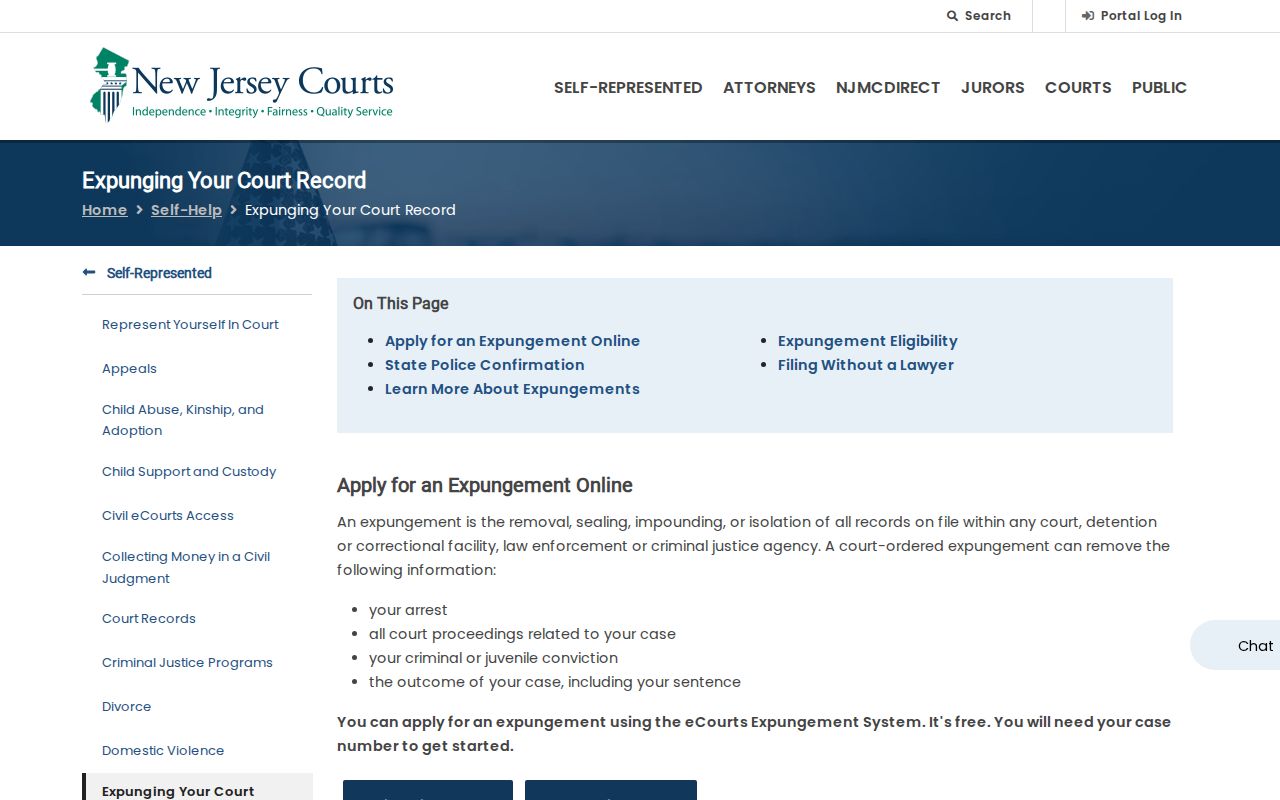
The court guidance separates eligibility and filing from NJSP's later work to implement a granted order.
Statewide Record Systems in New Jersey
New Jersey's statewide tools each answer a narrow question. PROMIS/Gavel supplies public information about indictable Superior Court matters in all 21 vicinages. Municipal complaints remain in a separate search. NJDOC lists people committed to state custody, not every county detainee. The Internet Registry publishes only registrants who meet New Jersey's legal rules for online display. SBI holds the compiled fingerprint history but limits dissemination.
A complete New Jersey criminal history check may therefore cross two or more systems. Court documents still come from the Judiciary records channel. Police narratives and booking details stay local. Federal cases and custody sit outside the state network in PACER and the Bureau of Prisons locator.
| System | What It Holds | Run By |
|---|---|---|
| Personal Record Request and SBI CCH | Fingerprint-linked New Jersey arrest and disposition history | New Jersey State Police SBI |
| NJDOC Offender Search Engine | People committed to state prison custody | New Jersey Department of Corrections |
| New Jersey Sex Offender Internet Registry | Registrants legally eligible for Internet publication | New Jersey State Police with local agencies |
| PROMIS/Gavel Public Access | Indictable Superior Court case information | New Jersey Judiciary |
New Jersey Warrant Checks
New Jersey does not provide one comprehensive public active-warrant search. Law enforcement uses restricted NJCJIS and national systems. A Superior Court warrant may leave an event in PROMIS/Gavel, while a municipal bench warrant belongs to the issuing municipal court and its case system. Arrest warrants or sealed complaints may remain unavailable before execution.
Search both court layers when the venue is uncertain. Then contact the clerk of the specific court or the published local warrant channel. An active warrant can lead to immediate arrest, so safe resolution belongs with the issuing court and, when needed, counsel. OPRA is a records law, not a real-time warrant-clearance service. The county directory is the route to the court and agency that can confirm status.
Active warrant: Do not rely on a private database or assume an old entry was cleared. Confirm directly with the issuing New Jersey court.
Types of Criminal Records
A New Jersey arrest can produce a police narrative, a booking entry, a Judiciary complaint, and an SBI fingerprint cycle. Those records serve different purposes and update on different schedules. Indictable cases proceed through Superior Court Criminal Part. Disorderly persons and petty disorderly persons matters ordinarily remain in municipal court. A rap sheet compiles selected identity, arrest, disposition, and custody data, but it is not the case jacket.
- Arrest and booking records: the creating police and custody agencies retain the full local file.
- Criminal court case files: the Judiciary holds complaints, events, judgments, and public filed documents.
- Repository rap sheets: SBI links statewide cycles to a fingerprint identity.
- Warrants: the issuing court and law-enforcement systems control current status.
- Supervision and registry records: the Judiciary, Parole Board, local police, county prosecutors, and NJSP split responsibility.
- Disposition
- The outcome entered for a charge, such as conviction, dismissal, acquittal, or remand.
- SBI number
- The New Jersey identifier assigned to a fingerprinted identity.
- Indictable crime
- A first- through fourth-degree crime handled in Superior Court, not a generic felony-class label.
- Expungement
- Extraction and isolation of covered records under New Jersey law, subject to limited exceptions.
These distinctions determine which New Jersey agency can verify a result and whether a public index, certified court copy, or fingerprint review is needed.
New Jersey Custody Systems
County jail, state prison, and federal custody are distinct. County correctional facilities hold many pretrial detainees and locally housed populations. NJDOC holds state-sentenced people and operates the Offender Search Engine. The Bureau of Prisons handles federal custody. NJ VINE can provide search and alerts for participating New Jersey agencies, but it does not replace the jail or court source.
The NJDOC profile can show an SBI number, aliases, current facility, county of commitment, offense, sentence, parole eligibility, and maximum release date. NJDOC warns that release dates can change as credits and institutional information are recalculated. Its January 1, 2026 population report counted 10,969 people in the prison complex across nine major institutions. County detainees are not comprehensively included.
The official NJDOC Offender Search Engine shows the state-custody search fields.
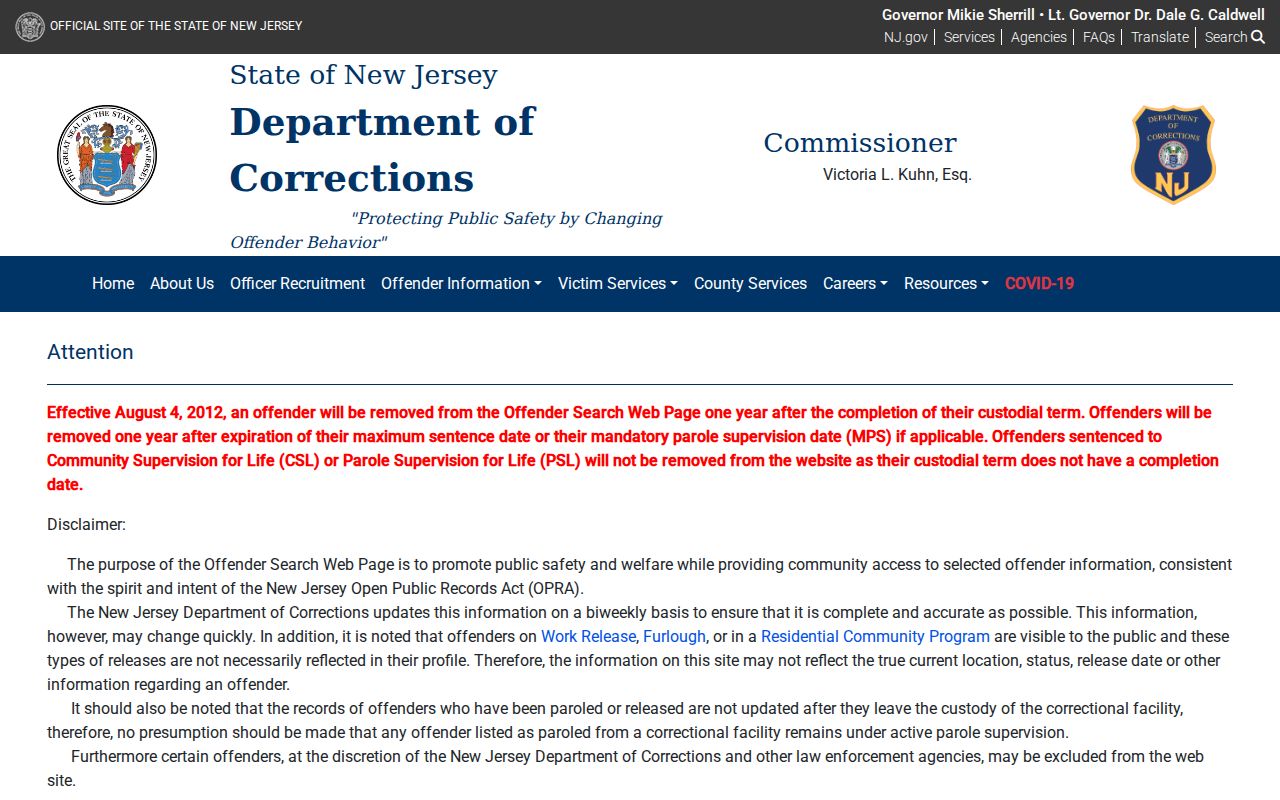
Use the county correctional channel first for a recent local arrest, then NJDOC only after a state commitment or transfer.
New Jersey Prison Record Counts
NJDOC publishes dated population reports by institution and characteristic. They are better sources for a statewide count than adding live search results, which change with admission, release, and correction activity. The New Jersey prison population reports preserve each snapshot and its scope.
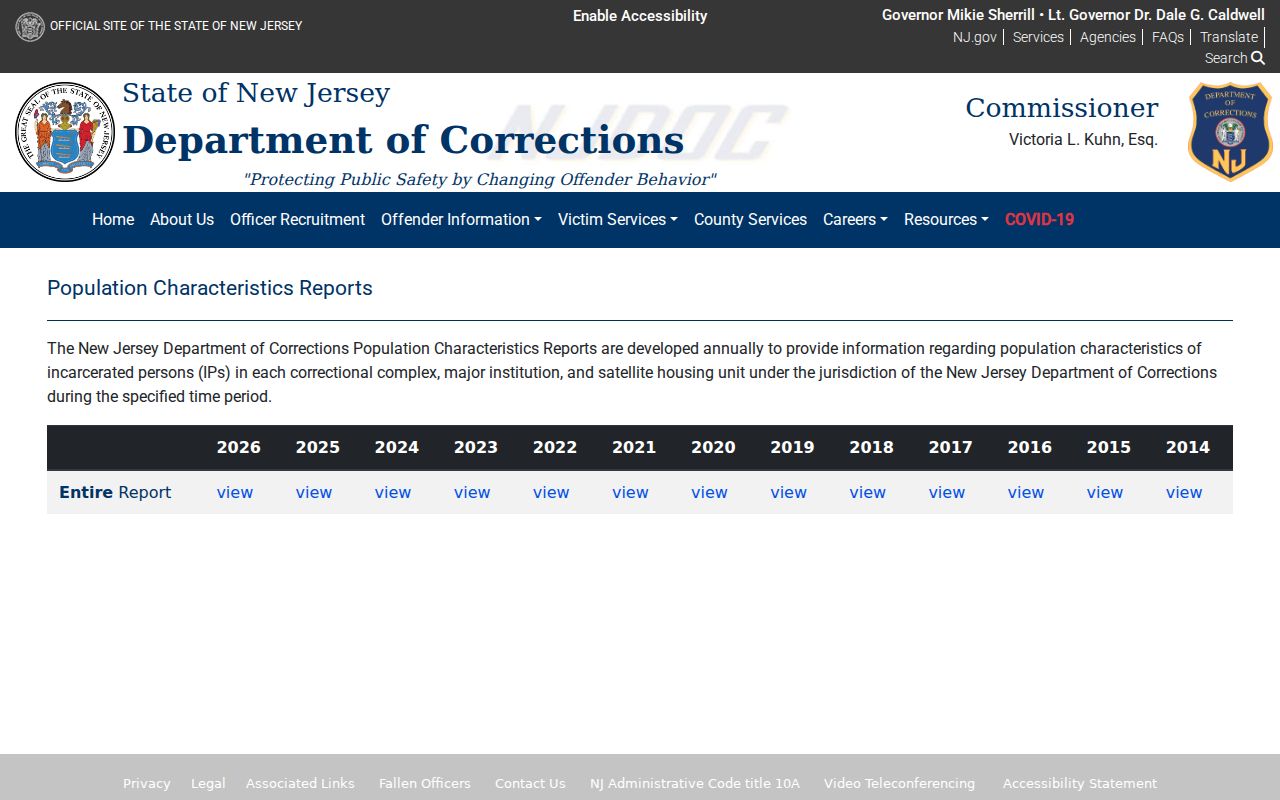
The January 1, 2026 report's 10,969 prison-complex count is a dated measure, not a promise about today's custody population or the number of unique criminal records.
New Jersey Probation and Parole
Probation and parole are two state systems. New Jersey Judiciary Probation Services supervises probation through county vicinage offices. The New Jersey State Parole Board makes parole decisions and supervises parolees through district offices and specialized units. A judgment may show the sentence, but detailed officer notes and risk material can remain confidential.
There is no complete public live name search for everyone on probation or parole. For probation, start with the judgment and the vicinage office. For parole, the NJDOC profile may show historical or eligibility information, but a released profile is not proof of present supervision. The Parole Board accepts current-status inquiries and OPRA requests for disclosable records.
The New Jersey State Parole Board status page identifies the official verification routes.
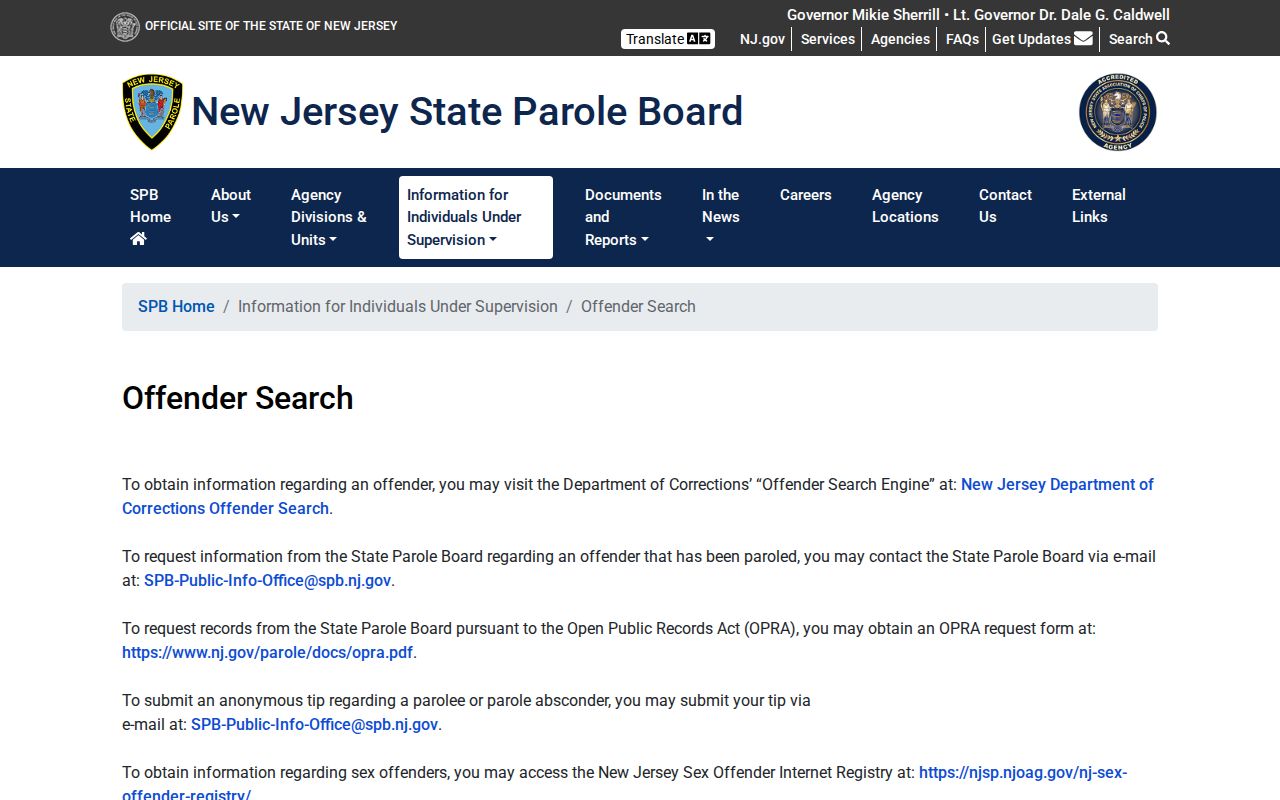
Its routing makes clear that NJDOC, parole information, OPRA, and the registry answer different questions.
New Jersey Police Record Requests
Police and incident reports stay with the agency that created them. NJSP's Criminal Justice Records Bureau handles NJSP-generated criminal, traffic, DWI, motor-vehicle, and boat records, including orders through the NJSP Crash Reports portal. A municipal, county, campus, transit, or port police report must be requested from that agency's records custodian. Give a report number, date, location, and precise record description.
OPRA can require access to specific arrest facts while still protecting investigatory detail, victims, minors, medical data, confidential techniques, and personal identifiers. Body-camera and 911 records have different retention rules. New Jersey's baseline body-camera retention is 180 days, with longer preservation for defined events and requests. PSAP recordings must be kept at least 31 days, so a prompt, narrow request matters.
The New Jersey Department of Corrections service page illustrates the separate state custody channel.
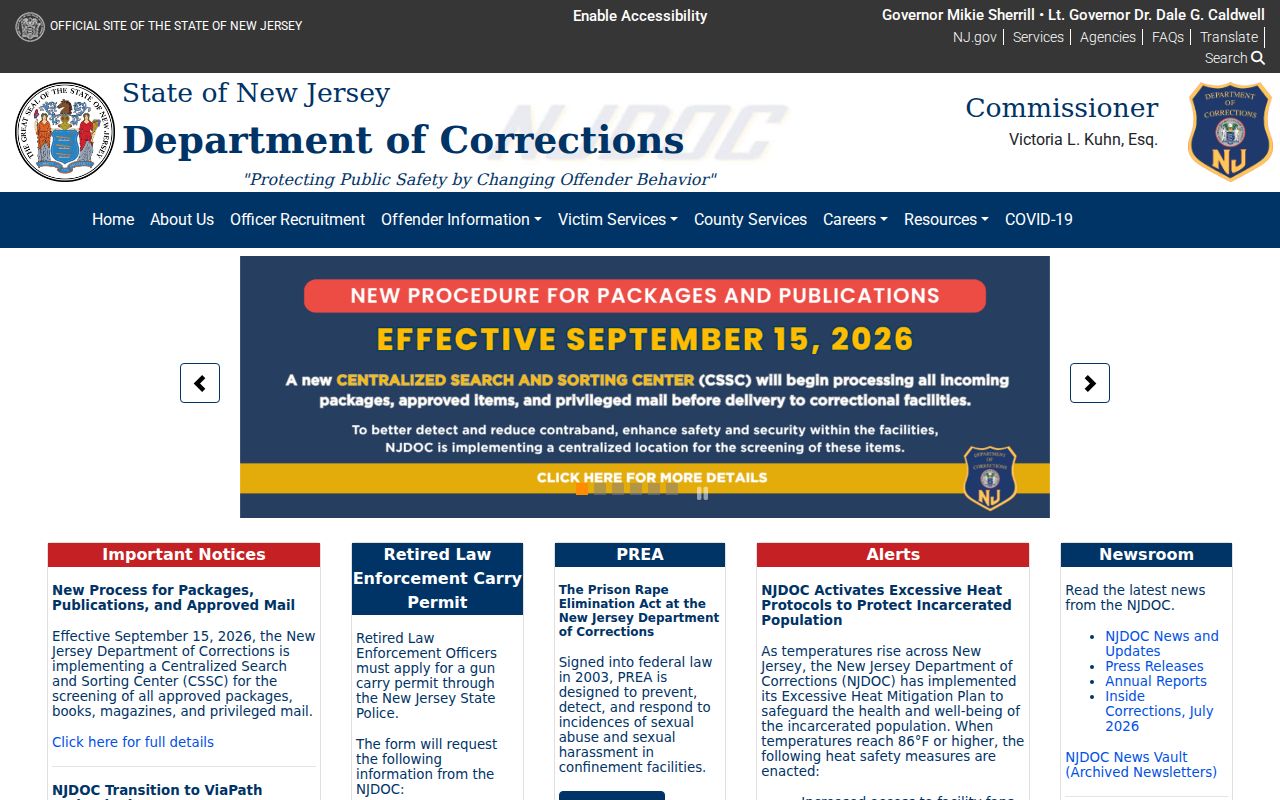
Custody information belongs with NJDOC or the county facility, while the arrest narrative remains with the police source.
Public Access Laws
The New Jersey Open Public Records Act governs records of executive agencies, subject to exemptions and privacy protections. It does not govern Judiciary case files. Court access instead follows Rule 1:38. SBI dissemination is narrower still under New Jersey criminal-history statutes and regulations. Public access to one filed court record does not turn the full rap sheet or police investigation into an open database.
OPRA ordinarily calls for a response as soon as possible and generally within seven business days for currently available noncommercial records. Paper copies normally cost five cents for letter-size pages and seven cents for legal-size pages. Electronic copies are generally free unless actual media, delivery, or a lawful special service charge applies.
Key Statutes:
OPRA, N.J.S.A. 47:1A-1 through -13 sets the executive-agency access framework and its exemptions.
N.J.S.A. 53:1-20.6 and N.J.A.C. 13:59 limit SBI criminal-history dissemination to authorized channels.
Court Rule 1:38 governs public Judiciary records and excludes sealed, confidential, and protected material.
N.J.S.A. 2C:52-1 et seq. establishes New Jersey expungement and its limits.
The Government Records Council OPRA FAQ explains request and appeal procedures.
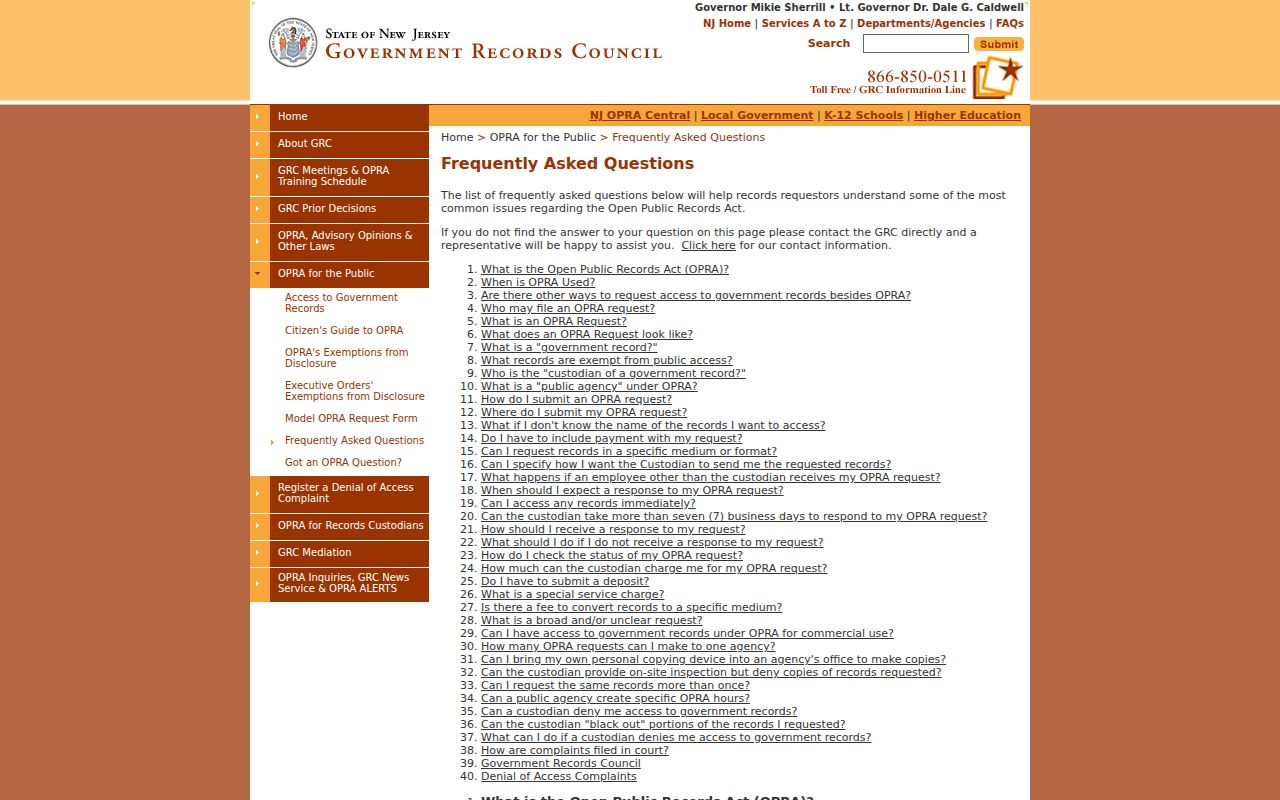
The official guidance helps distinguish a request for an existing record from a demand that an agency create research or answer questions.
New Jersey Degree Crimes
New Jersey does not use felony and misdemeanor classes as its main statutory labels. The ordinary imprisonment statute grades indictable offenses as first-, second-, third-, or fourth-degree crimes in Superior Court. Disorderly persons and petty disorderly persons offenses are handled in municipal court. The degree on an initial complaint remains an allegation. Read the final judgment because a charge may be amended, merged, downgraded, dismissed, or resolved through another path.
| Classification | Ordinary incarceration | Court |
|---|---|---|
| First-degree crime | 10 to 20 years | Superior Court Criminal Part |
| Second-degree crime | 5 to 10 years | Superior Court Criminal Part |
| Third-degree crime | 3 to 5 years | Superior Court Criminal Part |
| Fourth-degree crime | Up to 18 months | Superior Court Criminal Part |
| Disorderly persons offense | Up to 6 months | Municipal Court |
| Petty disorderly persons offense | Up to 30 days | Municipal Court |
Offense-specific statutes and mandatory terms can change those ordinary ranges. The table classifies records; it does not predict a sentence.
New Jersey Expungement Tracking
New Jersey expungement extracts and isolates covered records. It does not erase history in every legal context. Standard conviction relief, clean-slate relief, nonconviction relief, and automatic marijuana or hashish relief follow different rules. The Judiciary's eCourts Expungement process is free and can import case data, but the filer must review charges, dispositions, and missing cases before submitting.
A granted order still must be implemented by NJSP and the named agencies. A 2025 settlement set a 120-day outside NJSP processing target from June 1, with best efforts toward 90 days. The NJSP Expungement Status Portal lets a person track the order by XP number. After completion, a later fingerprint-based personal record review can help confirm the result. If an entry remains, contact the source court and NJSP rather than assuming a second filing is needed.
Note: Sealed, juvenile, and expunged records are not ordinary public search results, and limited statutory access can remain after relief.
Find Criminal Records by County in New Jersey
Arrests, jail bookings, municipal complaints, and Superior Court case files all have a local point of origin. New Jersey's largest counties also contain many separate municipal agencies and courts, so choosing the correct venue prevents a false no-result. Each of the state's 21 county sites routes to the local records room, custody channel, and public-record contacts.
Bergen County
Hackensack · The state's most populous county and a major court-record hub
Essex County
Newark · Separate courthouse and county custody channels
Middlesex County
New Brunswick · A high-volume central New Jersey criminal docket
Hudson County
Jersey City · Dense municipal and Superior Court record layers
Monmouth County
Freehold · County indictable files and separate shore municipal records
Ocean County
Toms River · County Justice Complex for indictable case records
Browse the full directory of all 21 New Jersey counties to open the criminal records site for any county.